
Superior Interior Air Quality & Safety
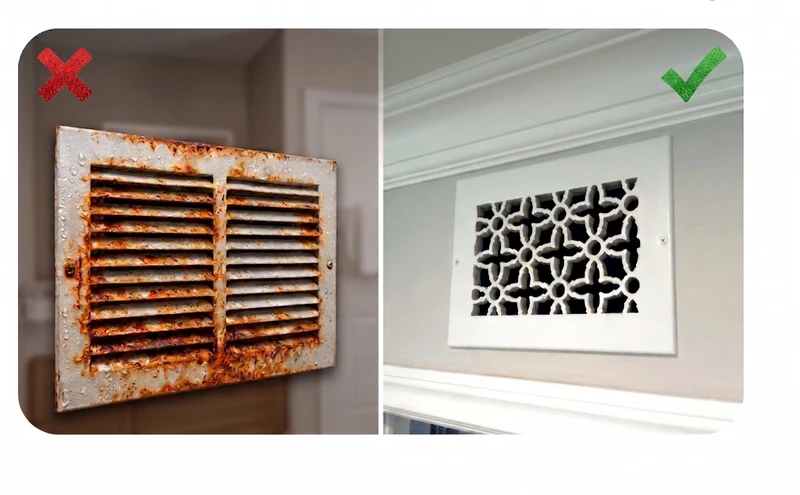
If you live near the coast or manage spaces with high humidity, you already know the endless battle against coastal air and moisture. Traditional metal vent covers—once the industry standard—frequently fail in these environments. Between unsightly rust, flaking paint, and constant moisture buildup, metal grilles often end up costing far more in maintenance and replacement than they are worth.
Modern interior design and building standards require materials engineered for longevity. High-quality resin vent covers deliver a permanent, high-performance solution that outperforms metal on every front.
The Core Advantages of Resin
-
100% Rust and Corrosion Proof
Salt air and persistent humidity act as accelerants for metal oxidation. Resin is immune to rust and chemical degradation, maintaining a pristine look even in coastal properties exposed to ocean breezes.
-
Eliminates Condensation ("Sweating")
Metal grilles conduct temperature rapidly. When cold conditioned air meets warm, humid room air on a metal surface, condensation forms immediately. Resin acts as a natural thermal barrier, drastically reducing surface temperature differentials and stopping condensation before it starts.
By preventing localized moisture accumulation around your vents, polyurethane grilles help protect surrounding drywall, paint, and ceiling structures from water staining and moisture damage.
Metal vs. Resin Polyurethane Vent Covers
| Feature | Resin Vent Covers | Metal Vent Covers |
| Rust & Corrosion Resistance |
|
|
| Condensation Management |
|
|
| Coastal Environment Performance |
|
|
| Maintenance |
|
|